July 8, 2026
Your Team Spends Hours on Work Your Software Should Be Doing
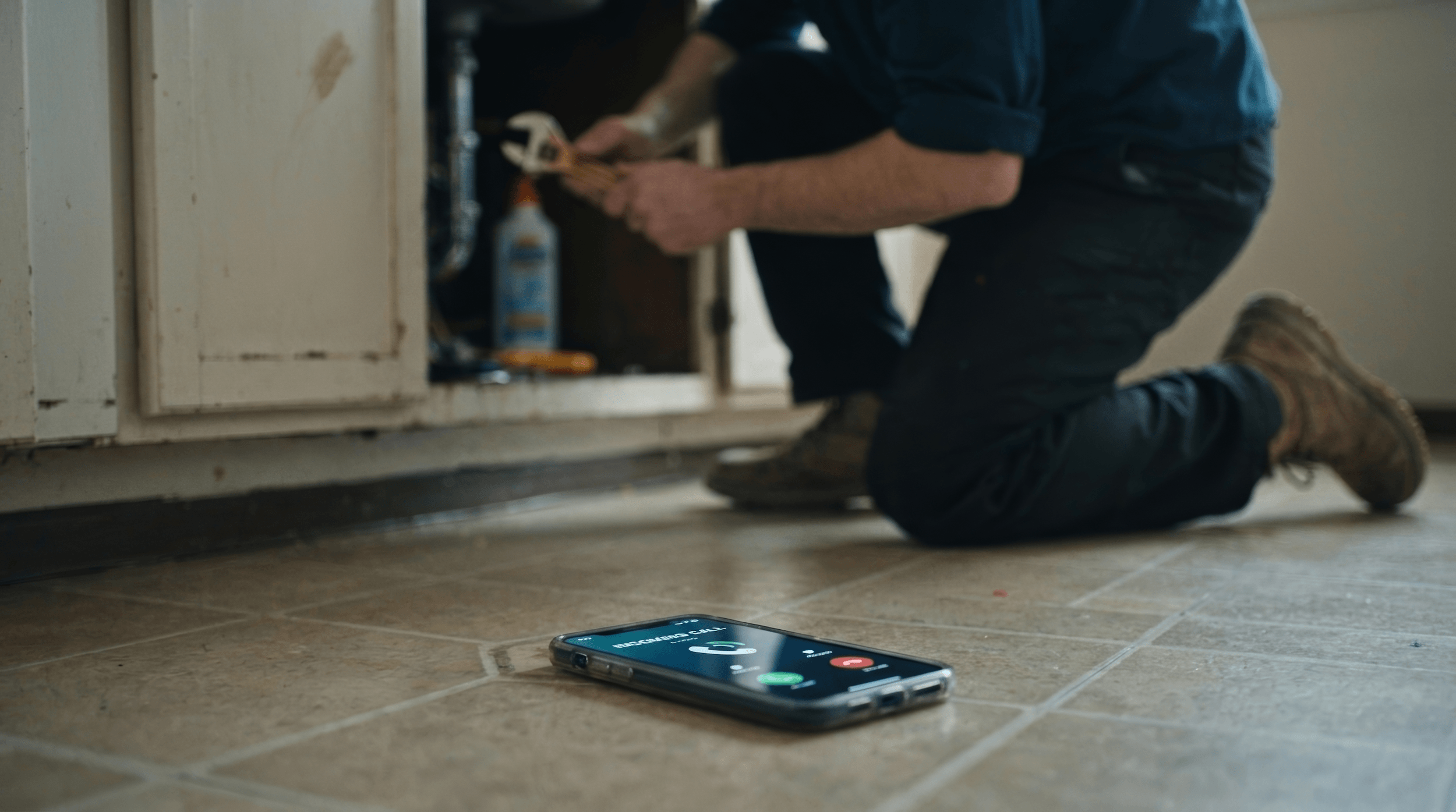
It's 2:15 on a Tuesday. The owner is under a sink with the phone buzzing in his back pocket. Back at the office, someone is retyping a web form into the CRM, copying a job from the calendar into an invoice, and checking voicemail for the third time today. Everyone on that team is working hard, on work their software should already be doing.
That's the problem we built BigBrain AI to solve. Your team spends hours on work your software should be doing. We build that software, and it stays yours.
Where the hours actually go
When we sit down with an owner and walk through a normal week, the lost time almost always lands in the same four places.
The phone. Calls come in mid-job, after hours and on weekends. Some go to voicemail and never call back. Others are robocalls and sales pitches that still pull you off the work in front of you. If you pay for leads on Google, Angie's or Thumbtack, a missed call means you paid for a customer who went to the next name on the list.
The retyping. A lead comes in by phone, gets written on a sticky note, and gets typed into the calendar that night. Then it's typed again into the invoice. Every handoff between systems is a person copying and pasting.
The chasing. Follow-ups, reminders, quotes that went out and never got a reply. The work is simple, so it gets pushed behind whatever feels urgent, and then it doesn't happen.
The questions. Staff ask the same five questions every week because the answers live in one person's head or in a binder nobody opens.
None of this shows up on a profit and loss statement. It shows up as long evenings, slow callbacks and jobs you never knew you lost.

Why the usual fixes don't stick
Most owners have already tried something. A new app, a new subscription, a tool a friend swore by. The trouble is that each one adds another tab, another login and another place for information to live. Your people become the cable that connects them.
The do-it-yourself route is real too. Plenty of platforms let you build an AI phone agent on your own, and some owners do it well. Getting one to sound right, know your services and prices, and hand off cleanly usually takes nights and weekends of testing, and that's time most owners don't have.
What we build
We do two kinds of work, and both start from the same question: what job is eating your team's time?
An AI agent that answers your line. It picks up mid-job, after hours and on weekends, and it can take several calls at once. It screens out robocalls and sales pitches so only real customers reach you. Every real call becomes a text to you with who called and what they need, and the agent can book straight into your calendar. You keep your number. You forward your calls to the agent, and every listing on Google, Angie's and Thumbtack stays exactly as it is. If a caller asks whether they're talking to a person, the agent tells them it's an AI. Most callers just care that someone picked up.
Custom software for the work behind the phone. Some problems are bigger than a missed call. For an accounting firm we work with, that meant a staff portal that pulled tracking out of spreadsheets and into one place the whole team could use. For other businesses it's connecting the booking tool to the CRM, building an internal knowledge base so staff stop asking the same questions, or automating the follow-ups that never get sent.
We've built agents for cleaning companies, plumbers, HVAC shops, law firms and accounting firms, and each one starts from that business's own services and questions.
How we work
One job first. We start with the one job costing you the most time, fix it, and measure it. When it earns its keep, we talk about the next one.
Built on your business. Your services, your prices, your service area, the questions your customers actually ask. A generic agent sounds generic. Ours sounds like it works for you because it was set up on your details.
Fast to go live. A voice agent is usually live in 1 to 3 business days. Custom builds get a scoped plan and a clear finish line before any money moves.
Tuned after launch. We listen to how calls go in the first weeks and adjust. The first version is the start, and the tuning is where it gets good.
You talk to the founders. BigBrain AI is two founders, John Bailey and Jeremy Keehn. When you call, you reach one of us. There's no ticket queue.
What the first month looks like
Days 1 to 3. We set the agent up on your services, prices and service area, run test calls with you, and turn on forwarding when you're happy with how it sounds.
Weeks 2 to 4. We listen to real calls, fix anything that sounds off, and add answers to the questions your customers ask that we didn't plan for.
End of the month. You see the numbers that matter: calls answered, spam calls screened, and jobs booked after hours or while you were on a job. That's how you decide whether it's earning its keep, based on your own calls.
It stays yours
This is the part we care about most. Your phone number stays yours. Your listings stay yours. Your customer data stays yours. And the custom software we build for your business belongs to your business. You're not renting your own operations back from us.
Where AI adoption actually starts
A lot of owners feel like they're behind on AI. Most of the businesses we talk to are one decision away: picking their first job. AI adoption for a small business starts the same way any good hire does: one clear job, a way to check the work, and someone who owns the result.
Your team spends hours on work your software should be doing.
See it for yourself
The fastest way to understand what we do is to hear it. Call our demo line at 559-242-9439 and talk to the agent the way your customers would. If you'd rather start with numbers, take the 3-minute scorecard at pulse.gobigbrain.ai and see where your hours go.
Either way, you'll know in a few minutes whether this fits your business. If it doesn't, we'll tell you.


